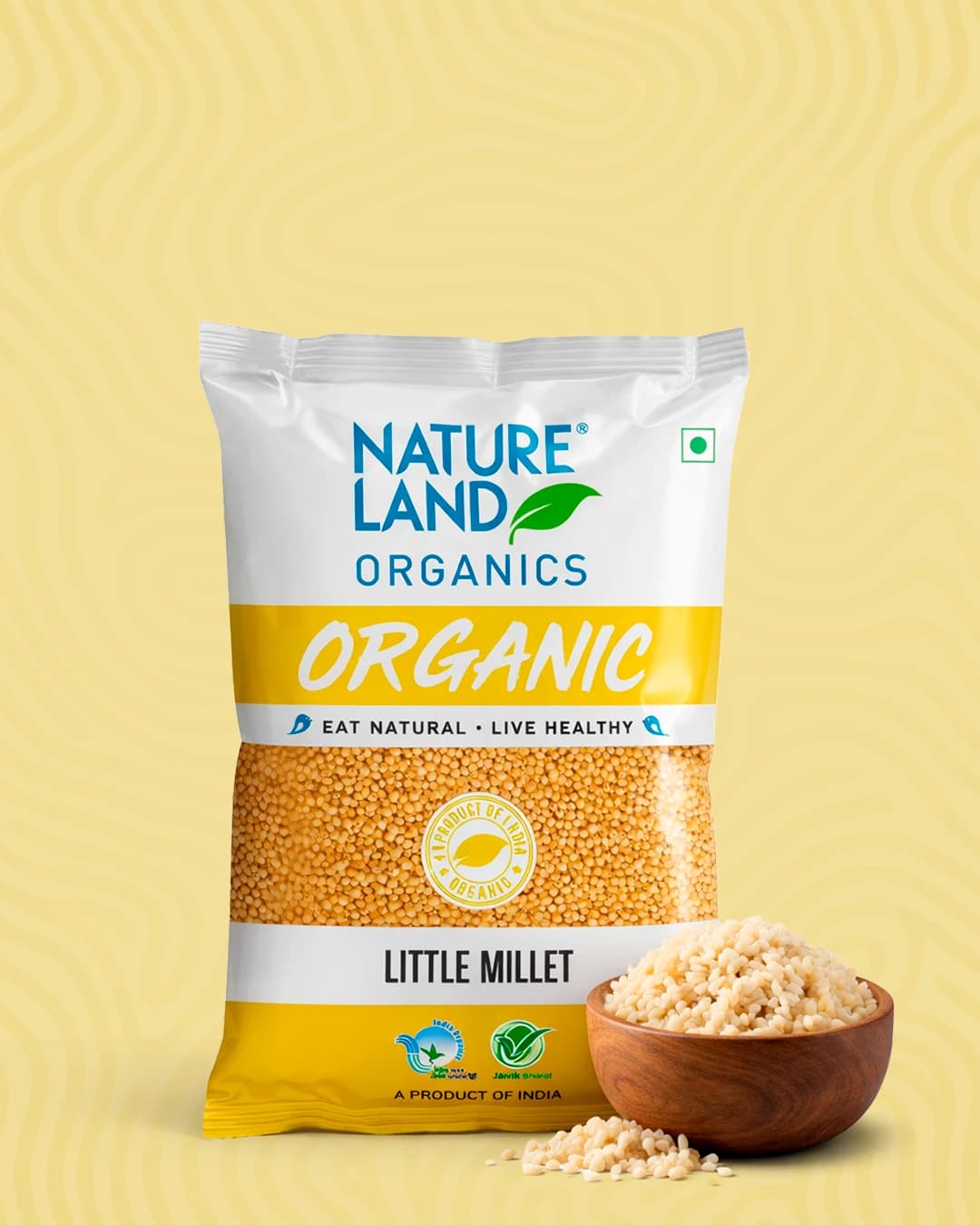
Nature Land Organics Little Millet
- Small, oval grains with a natural pale yellow-brown colour.
- Also known as Kutki in parts of central and eastern India.
- Has a mild, slightly nutty flavour and a light, fluffy texture when cooked.
- Can be cooked like rice and used in a variety of traditional Indian dishes.
Size
Please NoteProduct packaging or appearance may vary from the images shown. The product received may have updated or different packaging.
Expected Delivery
Dec 3 – Dec 9
to your location
9-13 business days
You save USD 0.94
Expected Delivery
Dec 3 – Dec 9
to your location
9-13 business days
Everything You Need to Know
Little Millet for Light Pongal, Upma and Everyday Rice-Style Dishes
Little millet is a small, oval grain with a pale yellow-brown colour. It is also known as kutki in parts of central and eastern India. The grains are tiny, and the outer layer gives them a slightly crunchy bite when cooked. Once cooked, they separate into light, fluffy pieces with a mild, slightly nutty taste. Little millet has been eaten in Indian homes for generations, and it is often cooked in the same way as rice.
Because the grains are small and fairly even in size, they cook uniformly in one pot. They keep their separate shape and do not turn heavy or sticky when cooked properly, which makes them a good choice for simple dishes. The flavour is gentle and takes ghee, mustard seeds, curry leaves, ginger and black pepper well. It fits easily into daily meals, both savoury and sweet. It is a practical grain for cooks who want something different from rice but still want a familiar, easy cooking method.
Little millet is used in many regional kitchens. It is cooked into a savoury pongal with pepper, cumin and ghee, or into an upma with onion and vegetables. It is also served as plain cooked grain with dal and curry, and made into a pulao with peas and carrots. In some homes it is cooked with milk and jaggery for a warm dessert. Its light texture and mild taste make it a useful item for any well-stocked pantry.
Please refer to the product packaging for the complete ingredient list.
How to Use and Shelf Life
Rinse the required quantity of millet in cold water two or three times, until the water runs mostly clear, and remove any stones or husk pieces. Soaking for about thirty minutes can help the grains cook more evenly, although it is optional. For plain cooked millet, use about two cups of water for each cup of grain, bring it to a boil with a pinch of salt, then cover, lower the flame and simmer for about fifteen to twenty minutes, until the water is absorbed and the grains are soft. Let the pot rest, covered, for five minutes before fluffing with a fork. For a savoury pongal, cook the grain with moong dal and add black pepper, cumin and ghee at the end. Cooking times depend on the age of the grain and your stove, so check for softness and add water as needed.
Check the manufacturing and best-before dates printed on the pack. Keep the pack sealed until use, and use the millet within the period recommended on the label after opening.
Storage Instruction
Store the pack in a cool, dry place, away from direct sunlight, heat and moisture. After opening, move the millet to a clean, dry, airtight container. Use a dry spoon each time so that moisture and pantry insects do not get in, and close the lid firmly after use. Whole millet keeps well in dry conditions, but it can attract insects in humid weather, so check the container from time to time. Cooked millet should be cooled, covered and kept in the refrigerator, and eaten within a day or two.
Brand Details
Nature Land Organics is an Indian brand that offers organic food products, including grains, pulses, flours, spices, oils and ghee. The brand supplies everyday kitchen staples for home cooking. Please refer to the label for the organic certification details of this product.
Shop Indian Products makes Nature Land Organics products available to customers living outside India, so they can order everyday Indian grains and staples for delivery abroad.
Different Ways to Use Little Millet
Cook the millet as a savoury pongal with moong dal, black pepper, cumin and ghee. Make an upma with onion, green chilli, curry leaves and carrots. Prepare a vegetable pulao with peas, beans and whole spices. Serve plain cooked millet with dal, a dry sabzi and a spoon of pickle. Make a light millet salad with cucumber, tomato and lemon. Cook the millet with milk, jaggery and cardamom for a warm dessert.
Because the grains stay light and separate after cooking, they suit both quick weekday breakfasts and simple one-pot meals. It is a practical pantry item for anyone who cooks Indian food regularly.
Important Disclaimer
While we work to ensure that product information is correct, on occasion manufacturers may alter their ingredient lists. Actual product packaging and materials may contain more and/or different information than that shown on our website. We recommend that you do not solely rely on the information presented and that you always read labels, warnings, and directions before using or consuming a product.
For additional information about a product, please contact the manufacturer. Content on this site is for reference purposes and is not intended to substitute for advice given by a physician, pharmacist, or other licensed health-care professional. You should not use this information as self-diagnosis or for treating a health problem or disease. Contact your health-care provider immediately if you suspect that you have a medical problem.